
Weather network
Weather conditions can directly affect the development of port operations and the dispersion of pollution, which is why it is very important to have reliable and up‑to‑date information. The Port’s meteorological network collects this data to help plan and manage activities, and records it to carry out climate analysis and assess air quality.
Data collection
In the port area there are currently seven meteorological stations: four of them are exclusively anemometric, meaning they only measure wind; the other three are full climate stations that, in addition to wind, are equipped with sensors that measure other variables such as atmospheric pressure, temperature, relative humidity, solar radiation, and precipitation.
The first stations were installed in 1997 at the Dispensari on the Bosch i Alsina quay (01) and at the Sirena of the port’s former entrance (02).
The value of the analysis
The analysis of series of values of the variables registered in the stations provides an image of the behaviour of the weather in the port. The results are expressed in graphs and tables below.
Climatology of the Port
The wind
The wind is the most significant meteorological variable in the port. The port area is located between the Montjuïc hill, the channelled course of the Llobregat River, the Mediterranean Sea, and the thermal island effect generated by the city of Barcelona. All these elements influence air circulation, making wind patterns highly variable across different areas of the port.
In addition to affecting the development of port operations, wind also plays a key role in the dispersion of atmospheric pollutants emitted within the port, and it can also transport pollutants originating outside the port area.
Wind regime in the Port
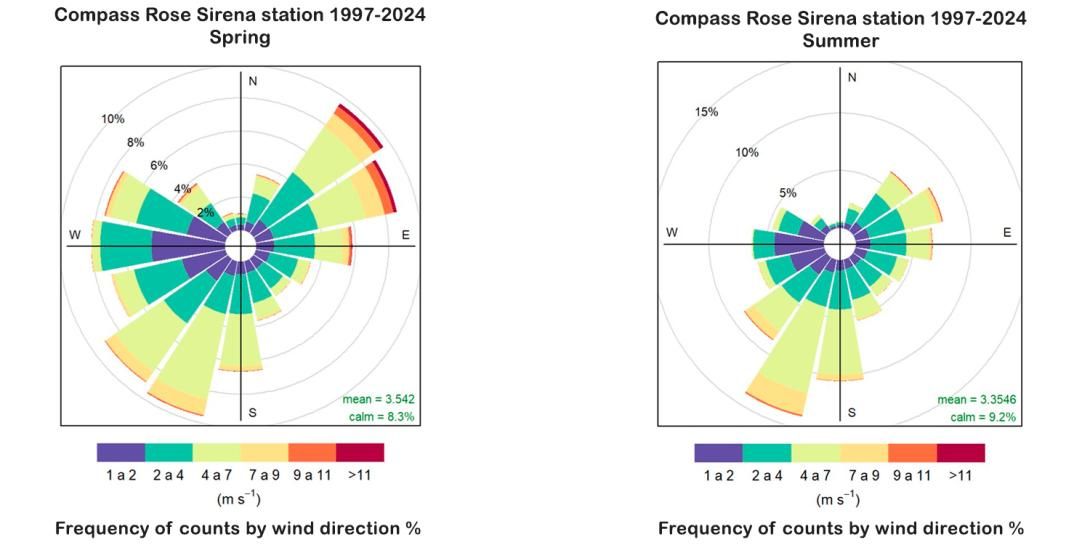
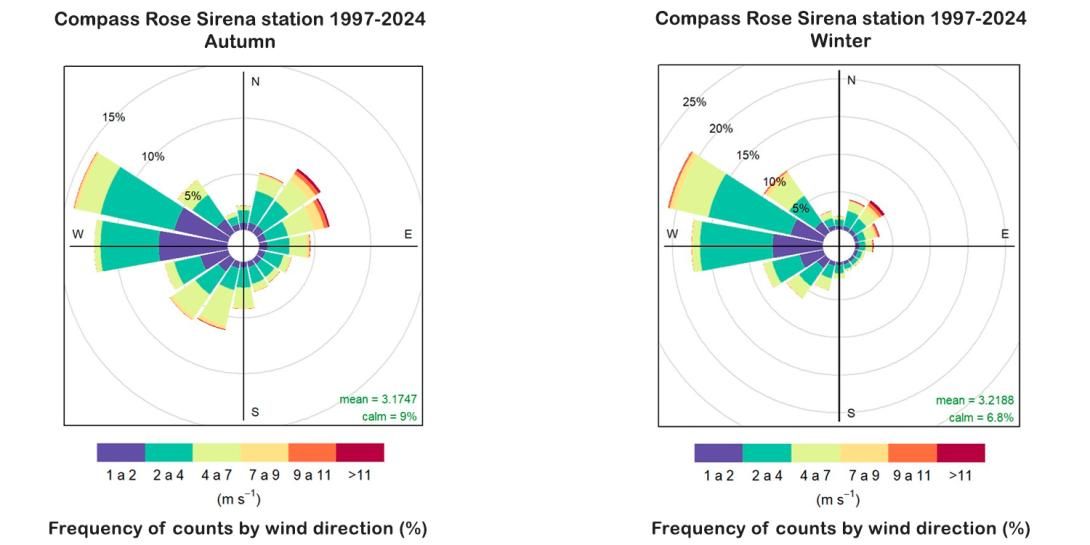
The most common winds in the port vary depending on the time of year. In winter and autumn, winds from the west prevail, linked to the general circulation of the atmosphere in the Northern Hemisphere and to Atlantic storms, which can cause episodes of strong winds. In contrast, in spring and especially in summer, coastal breezes dominate, with daytime sea breezes blowing from the sea to the land at moderate speeds that gradually increase as the sun warms the ground during the day, and weaker nighttime land breezes with a reversed flow from land to sea, carrying a southern component.
The wind also varies throughout the day. In the summer months this change is more pronounced than in the winter months, as shown in the following chart.
Wind rose
The wind rose graphically represents the frequency of wind coming from each direction.

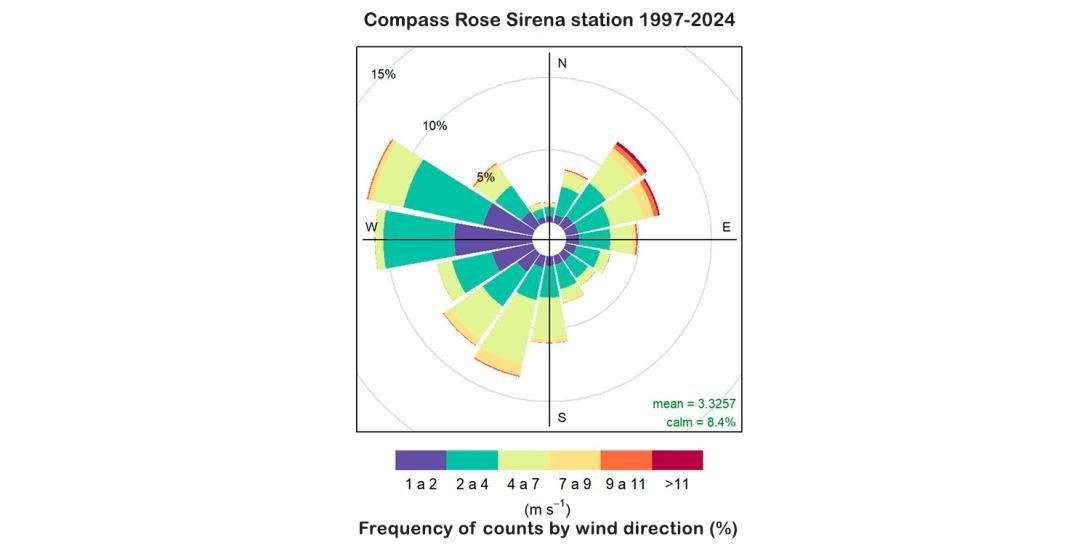
The following table shows the percentages represented in this wind rose for wind-speed intervals.
The wind rose varies throughout the year: in summer, easterly and southerly components associated with sea breezes predominate, while in autumn and winter westerly winds are more frequent.
Temperatures and precipitations
Weather forecasts
In addition to real-time meteorological observations, the development of port activities requires information about future conditions. The Port of Barcelona has customized wind, temperature, and wave forecasts, prepared by the Public Ports Authority of Spain (OPPE) in collaboration with the State Meteorological Agency (AEMET), which can be freely consulted on the Portus platform.
Planning and alerts
These forecasts allow for the activation of alerts in case of hazardous weather conditions at the Port of Barcelona and the limitation of operations at the different docks.
Related contacts

Environment Department
Port of Barcelona
Related news and agenda
-
Sustainability
The Port of Barcelona is making progress towards introducing cleaner fuels for ships
29 January 2024 -


