
The Port of Barcelona puts the multipurpose terminal of the Príncep d’Espanya wharf out to tender
The tender was initiated in light of the upcoming expiry of the current concession.
The Management Board has agreed to award the acquisition, installation and maintenance of the automated border control equipment to the joint venture comprising Inetum España and Ambar Seguridad y Energía.
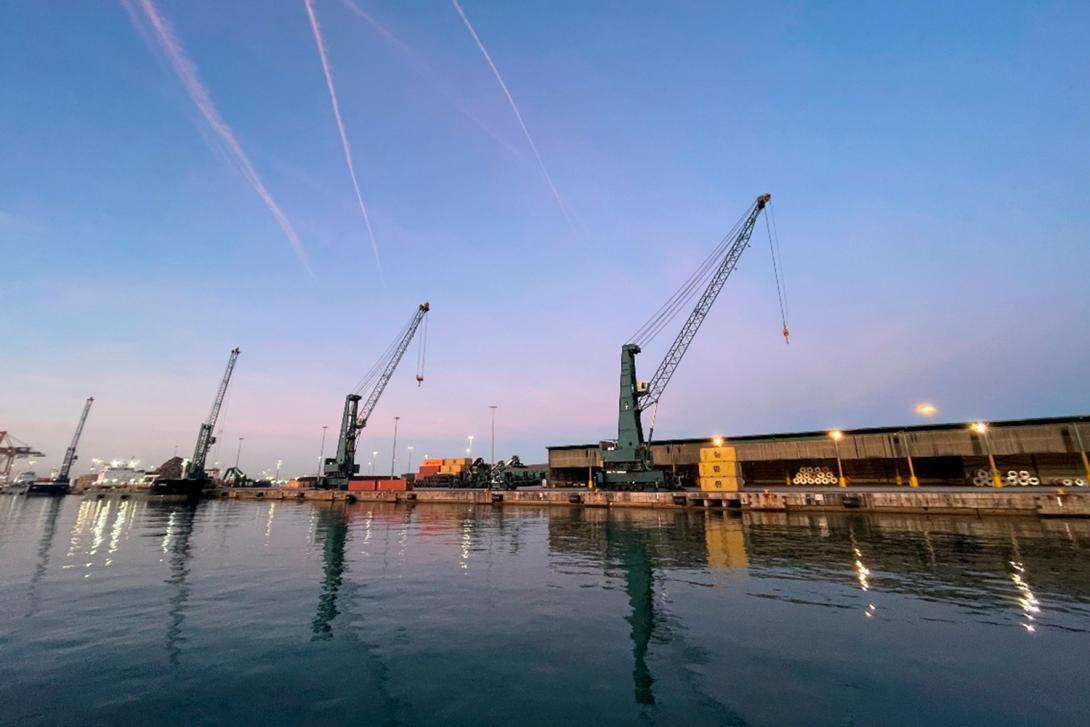
The Port of Barcelona Management Board today authorised the start of the tender process to award a concession for a public multipurpose maritime terminal, located on Príncep d'Espanya wharf. The tender was initiated following the expiry of the current concession this year.
The new terminal will provide continuity to the non-containerised general cargo activity, an essential traffic segment for the strategic positioning of the Port. Without this tender, it would hold a monopoly on such activity. The aim is to guarantee a competitive service, open to third parties and aligned with the logistical and industrial needs of the area.
A terminal adapted to current needs
The future facility will cover an area of 87,425 m² that includes the existing office buildings and parking facility, which will be maintained, while the remaining structures may be refurbished or replaced as decided by the successful bidder.
The tender specifications determine that the terminal will be able to handle general cargo and certain mixed traffic, but excludes specialised traffic such as passengers (except professional drivers), dry and liquid bulk. It also establishes a minimum volume of non-containerised general cargo to avoid exclusive handling of container ships that can be serviced at other existing terminals. It further specifies that “it is not considered reasonable to fully exclude the possibility of handling containers, given that there is traffic in mixed, general ro-ro cargo and vertical handling container ships that would not be operated in the existing container or ro-ro cargo terminals.”
Minimum investments and equipment
The tender establishes an indicative investment of around €3.6 million in civil engineering works and facilities. The terminal must have at least three mobile cranes (two of which have been working for under five years at the start of the concession) and six sets of auxiliary goods handling equipment. Additional investments in specialised machinery will be required if traffic exceeds certain thresholds (15,000 TEUs per year or 50,000 tonnes of ro-ro cargo).
Duration of the concession and future scenarios
The concession will be granted for a 16-year period with the possibility of early termination from year 10, if activities within the port area require reorganisation. In this scenario, the concession-holder would be entitled to compensation for the investments that have not been amortised.
In line with the Port of Barcelona's decarbonisation strategy, the tender incorporates environmental criteria such as energy efficiency of the equipment; renewable energy generation; measures to reduce water and electricity consumption, and the possibility to electrify machinery.
The procedure is open and is subject to an ordinary procedure, with broad solvency requirements to guarantee competition between operators. Bids will be evaluated according to a combination of technical and financial criteria.
The Port of Barcelona awards the acquisition, installation and maintenance of automated border control equipment for €4,037,769.55
The Port of Barcelona Management Board also agreed to award the acquisition, installation and maintenance of the automated European border control equipment to Inetum España SA, in a joint venture with Ambar Seguridad y Energía SL. The system includes the Exit Entry System (EES) and the European Travel Information and Authorisation System (ETIAS), which must be implemented in all ports owned by the Spanish State. The contract was awarded for €4,037,769.55 for the two years of the framework agreement, with the possibility to approve a maximum of two further annual extensions.
The EES and ETIAS define how entries and exits are carried out at a border control and require an electronic record of the biometric data and documentation (passport and ID card) of citizens from outside the European Union (EU).
The tender, performed through an open procedure, includes the supply, installation, commissioning and maintenance of the necessary equipment; adaptation of the areas and infrastructure of the terminals concerned, and an auxiliary information service to facilitate the entry of people through the border crossing.
The necessary infrastructure includes automatic doors, self-service kiosks and monitoring and verification tablets, as well as video surveillance and digital signage systems. The winning bidder must also provide the control rooms: containers equipped with EES technology and cabins at manual control points. The Port of Barcelona terminals that will incorporate this border control system are cruise terminals C, E, G and H and the ferry terminals.
The acquisition and installation of the equipment is funded by a 75% subsidy from the EU's Border Management and Visa Policy Instrument (BMVI).


