Message from the President
Investments are an essential factor for expanding and improving the infrastructure and achieving a more efficient and competitive port
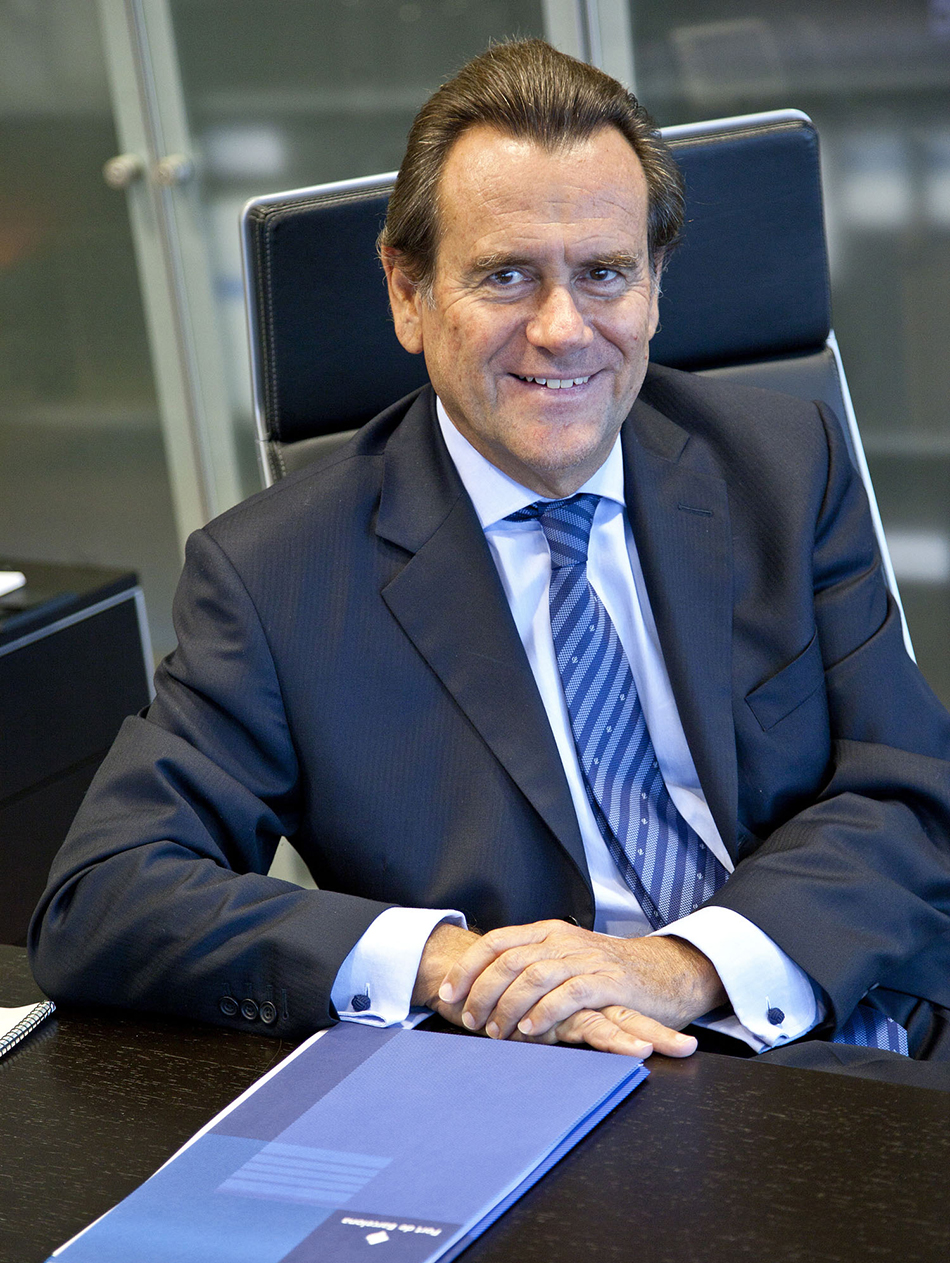
Sixte Cambra
President of the Port of Barcelona
This year was characterised by the solid progress made by the Port of Barcelona around the three areas of activity that realise the objectives of the Third Strategic Plan 2015 - 2020: growth, competitiveness and sustainability.
The traffic and financial results of 2016 show how we are moving forward decisively in the first of these areas, growth. The expansion to a larger and increasingly consolidated hinterland, the increasing exchanges with the foreland through intense commercial activity, and the efficiency and competitiveness of port services have led to a general increase in freight traffic at the Port and the largest increase in container movements in a decade. We should underline the record results in three strategic traffic segments: containerised cargo in foreign trade, which exceeded 1.2 million TEU; vehicles, approaching one million units; and almost 4 million passengers.
On the economic front, the lower profit recorded during the year is not a reflection of activity in the Port (in fact, total traffic grew by 3.4%), but rather due to the fact that 2015 was an exceptionally positive one thanks to extraordinary gains from the sale of financial assets. So, in spite of the reduction in fees for concessions resulting from land revaluation, dynamic activity at the Port caused net turnover to remain stable. Much more important is the significant ability to generate resources that we showed once again. The € 86.3 million in cash flow, apart from representing a 17% increase year on year, allowed us to substantially reduce long-term bank debt, which now stands at € 303.9 million, and to perform investments worth more than € 26 million.
These investments are essential for enlarging and improving infrastructure and thereby achieving a more efficient and competitive port. Among this year's investments, contracts were awarded for road and rail access works to the future ICL Iberia terminal, and the Adossat wharf enlargement was put out to tender to expand the multipurpose installation at the Port Nou terminal and free up space for the future cruise terminal E.
Two agreements were signed with the relevant bodies entities involved to promote the development of the rail accesses: one to regulate the necessary financial contributions, which will amount to € 77.2 million by Adif and € 72.6 million by the Port, and will be aided by the European Commission through the Connecting Europe Facility (CEF); and another to agree to the transfer of certain infrastructures from the Government of Catalonia to Adif and their inclusion in the railway network of general interest. However, by the end of the year Adif had filed to tender out the main project of the accesses that had been announced for quite some time.
1/2
2016 was the year in which a number of high-level competitiveness initiatives being either bolstered or set in train. Thus, the Efficiency Network quality label, now consolidated after five years' existence and 75 member companies, began the process of renewing the label's commitments. Also aimed at increasing the efficiency and excellence in service of the Port Community and linked to innovation, several initiatives representing a valuable differentiating factor of our port were launched. One such initiative is Port Challenge Barcelona, a business acceleration programme led by the Port in cooperation with the Founder Institute, which aims to promote the creation of innovative technology-based businesses to boost competitiveness in the port environment. Another is Port Links, a pioneering tool in Europe which, based on other own previous experiences, such as the Ecocalculator, can build and compare online transport chains via Barcelona and offers exhaustive information on various economic and environmental indicators.
As in the Port Links initiative, the Port of Barcelona has played a pioneering role over the last few decades with regard to sustainability; and it will continue to do so in the coming years, as it is one of the pillars of its Strategic Plan. In 2016 we took an important step with the Air Quality Improvement Plan, which makes a firm commitment for liquefied natural gas (LNG) as an alternative mobility fuel for ships, trucks and land-based machinery. Future scenarios pose the need to substantially reduce emissions and the maritime industry is not exempt from the growing social and business demand to reduce its environmental externalities. Indeed, the Port of Barcelona is facing this challenge decisively, as we have done in other areas.
In recent years, as we have repeatedly said, we are aware that the maritime business is immersed in a process of rapid change, marked by increased competition, changes in vessel size, lower profit margins and demands for sustainability of our activity. In this environment we understand that our role should not be limited to adapting to the circumstances, but rather we are in a position to strengthen our leadership. The data and the facts clearly show this. The strategy is defined; so are the objectives and lines of action to achieve them; our motor, the joint and qualified work of the entire Port Community, is primed and running. We continue to look to the future and to consolidate our leadership.
2/2
Message from the President
Investments are an essential factor for expanding and improving the infrastructure and achieving a more efficient and competitive port
Sixte Cambra
President of the Port of Barcelona
This year was characterised by the solid progress made by the Port of Barcelona around the three areas of activity that realise the objectives of the Third Strategic Plan 2015 - 2020: growth, competitiveness and sustainability.
The traffic and financial results of 2016 show how we are moving forward decisively in the first of these areas, growth. The expansion to a larger and increasingly consolidated hinterland, the increasing exchanges with the foreland through intense commercial activity, and the efficiency and competitiveness of port services have led to a general increase in freight traffic at the Port and the largest increase in container movements in a decade. We should underline the record results in three strategic traffic segments: containerised cargo in foreign trade, which exceeded 1.2 million TEU; vehicles, approaching one million units; and almost 4 million passengers.
On the economic front, the lower profit recorded during the year is not a reflection of activity in the Port (in fact, total traffic grew by 3.4%), but rather due to the fact that 2015 was an exceptionally positive one thanks to extraordinary gains from the sale of financial assets. So, in spite of the reduction in fees for concessions resulting from land revaluation, dynamic activity at the Port caused net turnover to remain stable. Much more important is the significant ability to generate resources that we showed once again. The € 86.3 million in cash flow, apart from representing a 17% increase year on year, allowed us to substantially reduce long-term bank debt, which now stands at € 303.9 million, and to perform investments worth more than € 26 million.
These investments are essential for enlarging and improving infrastructure and thereby achieving a more efficient and competitive port. Among this year's investments, contracts were awarded for road and rail access works to the future ICL Iberia terminal, and the Adossat wharf enlargement was put out to tender to expand the multipurpose installation at the Port Nou terminal and free up space for the future cruise terminal E.
Two agreements were signed with the relevant bodies entities involved to promote the development of the rail accesses: one to regulate the necessary financial contributions, which will amount to € 77.2 million by Adif and € 72.6 million by the Port, and will be aided by the European Commission through the Connecting Europe Facility (CEF); and another to agree to the transfer of certain infrastructures from the Government of Catalonia to Adif and their inclusion in the railway network of general interest. However, by the end of the year Adif had filed to tender out the main project of the accesses that had been announced for quite some time.
1/2
2016 was the year in which a number of high-level competitiveness initiatives being either bolstered or set in train. Thus, the Efficiency Network quality label, now consolidated after five years' existence and 75 member companies, began the process of renewing the label's commitments. Also aimed at increasing the efficiency and excellence in service of the Port Community and linked to innovation, several initiatives representing a valuable differentiating factor of our port were launched. One such initiative is Port Challenge Barcelona, a business acceleration programme led by the Port in cooperation with the Founder Institute, which aims to promote the creation of innovative technology-based businesses to boost competitiveness in the port environment. Another is Port Links, a pioneering tool in Europe which, based on other own previous experiences, such as the Ecocalculator, can build and compare online transport chains via Barcelona and offers exhaustive information on various economic and environmental indicators.
As in the Port Links initiative, the Port of Barcelona has played a pioneering role over the last few decades with regard to sustainability; and it will continue to do so in the coming years, as it is one of the pillars of its Strategic Plan. In 2016 we took an important step with the Air Quality Improvement Plan, which makes a firm commitment for liquefied natural gas (LNG) as an alternative mobility fuel for ships, trucks and land-based machinery. Future scenarios pose the need to substantially reduce emissions and the maritime industry is not exempt from the growing social and business demand to reduce its environmental externalities. Indeed, the Port of Barcelona is facing this challenge decisively, as we have done in other areas.
In recent years, as we have repeatedly said, we are aware that the maritime business is immersed in a process of rapid change, marked by increased competition, changes in vessel size, lower profit margins and demands for sustainability of our activity. In this environment we understand that our role should not be limited to adapting to the circumstances, but rather we are in a position to strengthen our leadership. The data and the facts clearly show this. The strategy is defined; so are the objectives and lines of action to achieve them; our motor, the joint and qualified work of the entire Port Community, is primed and running. We continue to look to the future and to consolidate our leadership.